
In the era of streaming music and podcasts, the radio seems like a relic from antiquity that only our parents who can’t figure out how to work Spotify listen to. But it wasn’t so long ago that radio was one of the only ways to engage with music; it was, perhaps, the only way to keep yourself from dying of boredom while driving in rush-hour traffic. Certainly vinyl, cassettes, CDs, and the like could supplement the radio, but they did not replace the radio in the same way that streaming increasingly seems to be. If we’re itching to discover new music, there’s algorithmically curated playlists for that, and if we want companionship—well, that’s what podcasts are for.
I’ll start by saying that I’m not an avid radio-listener. My daily commute is soundtracked by my playlists and CDs. Sometimes I pop the radio on for the ten minutes it takes to do my makeup in the morning, in an effort to not be on my phone, but I can’t even say it’s always enjoyable because sometimes those ten minutes are almost entirely consumed by the astronomically long ad breaks. But, there are other mornings when they play the exact song I’ve been craving, or a song I’ve never heard that really lights me up. I discovered some of my favourite artists because I heard them for the first time on the radio. In high school there was a lengthy period where the bluetooth in my car wasn’t working, and I was forced to endure the radio. In doing so, I heard the song “Come Undone” by Duran Duran, and after that they quickly became one of my favourite bands, igniting my love for New Wave and Synthpop that has stubbornly endured for the last six years. I’ve bonded with people who would become my closest friends over this love, and gone to events that changed the trajectory of my life, all because I was listening to the radio one particular January afternoon on the drive home from school. I struggle to say that I love radio, because I personally don’t think anything tangible would be lost from my life without it, but I do feel like there would be a metaphysical gap within me.
Streaming vs. Radio
As mentioned, streaming seems to be replacing radio—people listen to music on streaming while doing the tasks that might’ve once been made marginally more interesting by the radio. In that immediate, practical sense streaming has the upper hand because of the lack of ads and ability to choose exactly what you want to listen to. That being said, in a more philosophical, humanist sense, there is something oddly cold and individualistic about streaming. There is a lack of human presence. Playlists are often curated by algorithms which choose songs based on your past listening habits—they are designed to retain your attention or interest rather than authentically expand your musical vocabulary or share something interesting. In contrast, the human presence of a DJ or radio host fosters a sense of connection that is lost with an algorithm. The hosts’ fluffy chatter between songs may be almost useless, but I still find comfort in knowing that there is someone out there with a passion for music, whose taste might not be at all similar to mine, but that we might find common ground in one really good song. As the classic Queen song “Radio Ga Ga” says: “I’d sit alone and watch your light / My only friend through teenage nights / And everything I had to know / I heard it on my radio.”
This may sound a bit high-brow, but if you only ever listen to the same songs over and over again, the songs that your algorithm pumps out for you, then there is so much you’re missing out on. The amount of music out there is literally endless, and it feels—I don’t know—anemic, to needlessly limit yourself when there is so much access out there. I can understand the feeling of overwhelm that can come with that unparalleled access, but I do believe that that’s what DJs are for: they help you dip your toes into something new, maybe unfamiliar, but nonetheless interesting. Radio helps you expand your musical vocabulary in a way that I don’t think streaming does as effectively.
That’s not to say that radio is some perfect beacon of musical integrity. Historically, radio stations have been huge gatekeepers of what kind of music gets popular, and streaming has—theoretically—democratized the industry to allow smaller artists the chance of gaining a following. In the more immediate, individual sense, though, not being able to always choose what song or genre you’re listening to can be annoying. But I think that kind of small, inconsequential annoyance builds character. At one of my old retail jobs, my manager used to always play a commercial station dedicated to a genre I despised, but spending so much time listening to the same songs—sometimes three or four times over the span of an eight hour shift—gave me plenty of exposure to thoughtfully articulate why I disliked that genre; what about it particularly didn’t work for me. And, at the same time, there were a few songs that I did come around to in the end.
And, of course, there’s the ads. The modern radio business is basically built on selling ad space to businesses, which means that considerable air time is dedicated to trying to sell you stuff. As someone who worked for a very brief time in advertising, and who even penned one singular radio ad that was broadcast, some of these ads are at best painful, and at worst horrifying. Maybe it’s because I’m quite a bit younger than my station-of-choice’s usual demographic, and so ads that are supposed to read as funny are instead just cringe. That being said, the ads are also not entirely useless. It’s nice to hear about events going on in the city, especially different concerts happening at venues I wouldn’t think to go to.
Best of Both Worlds and Interesting Alternatives
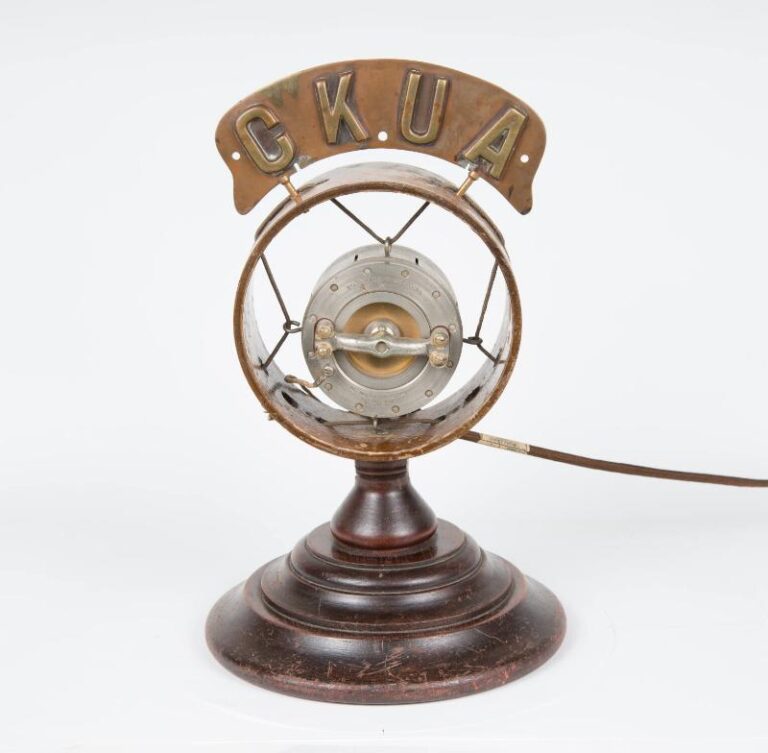
The solution to the downsides of both streaming and radio is, perhaps boringly, presented in the form of public radio. Obviously I can’t speak for all public radio stations, which operate differently depending on the locale, but the brief time I spent last summer listening to my own local station, CKUA in Alberta, was a real treat. CKUA is donor funded, so the ad-space is significantly limited compared to commercial radio—when I listened to it I counted about five minutes of ads at the end of every hour, and those ads seemed more pertinent to me and my interests, anyway. Further, the music shared on CKUA is much more collective and diverse than any other local station I’ve listened to. According to their website, “Every hour is handcrafted by iconic hosts who live and breathe music, arts, and culture,” which seems to be the epitome of that culture-and-community focused ideology that makes radio more human than streaming. At another quick glance, we can see the wide range of genres they are playing on the day of writing, from classical, to alternative/eclectic, country/folk, blues, as well as rock/roots.
Taking a look at their playlist, which documents every song played throughout the day, the featured artists are almost exclusively Canadian—these are names I recognize from posters at local music venues. Where I live in Canada, artists playing on the commercial radio stations rarely venture to my city—but looking at the CKUA playlist, these are artists who are almost constantly touring around the country, and are bound to have, like, three shows somewhere in my city in the next year. Whenever people complain to me that “nobody ever comes to Canada!” I have to tell them that they’re just not listening to the right artists. And CKUA is a great way to find those artists.
But, fine, let’s say not having genre control is still a dealbreaker for you. That’s fine. But, my fellow Canadians, hear me out: I’ve been experimenting with the the CBC Listen app, and it’s actually pretty good. The music on there is sorted into playlists by genre and mood within genre. But the key is that there is no way to view the queue, so even if you like a genre, there’s no way of knowing exactly what you’re gonna get. I don’t know how these playlists are curated, probably still by algorithm, but I’m actually getting really great songs by artists I’ve never heard of. As mentioned above, I’m a New Wave fan, and I’m always looking to explore new artists and songs within the genre. On Spotify, all the New Wave playlists basically look the same for me and are hardly ever updated. In the past few days of listening to CBC Listen, I’ve Shazamed five songs, mostly by artists I’ve never heard of. Plus, there’s no ads. For me, it’s a win in every way—the best of both the world of streaming and the world of radio.
Where Does That Leave Us?
At the end of the day, why not use both? The goal should be expansion and diversification of the ways in which we are able to engage with music, not one overtaking the other. It’s about “yes, and”-ing what we have. Listen to your playlists when you want to, and when you get bored of them turn on the radio (or something else) and find something new. Try a new genre. See what’s out there. Build a feeling of comradeship with your local music community, even if it’s just through the airwaves. Music is one of the oldest artforms, and listening to a vast array of it is of vital importance—it exposes you to different worldviews, perspectives, stories, and understandings. You might not like everything, but radio is a great entry point to expand your horizons. And isn’t that what it’s all about?